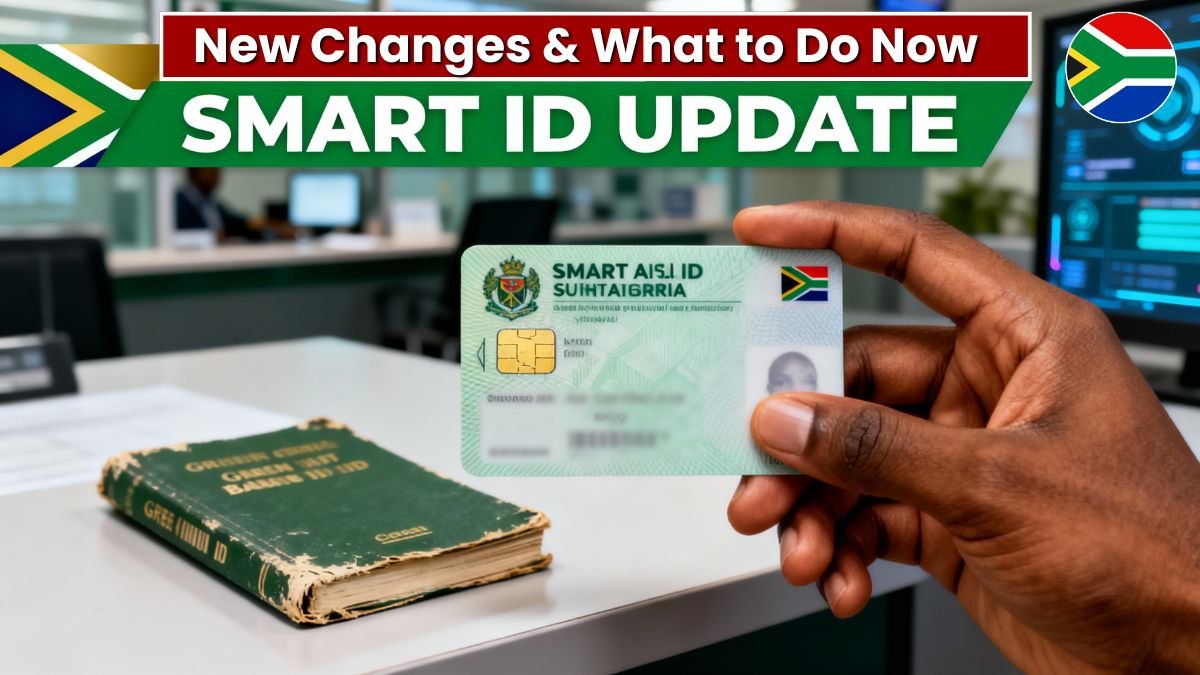
KEY HIGHLIGHTS
- South Africa’s Smart ID rules get a major upgrade for 2026.
- Digital applications, tighter biometrics, and faster processing lead the changes.
- The old green ID book is being phased out sooner than expected.
If you’ve ever stood in a long Home Affairs queue hoping the office doesn’t close before your turn, this update will feel personal. The South Africa Smart ID rules for 2026 are shifting how millions manage their identity—and honestly, it’s overdue.
We’re looking at faster systems, stronger security, and a real push to move the country past the old green ID book. Let’s walk through what’s changing, in simple terms, like we’re chatting over tea at a friend’s place.
The aim is clear: make identity safer, quicker, and far less painful to manage.
Here’s the updated breakdown.
Summary Table: What’s Changing in 2026
| Area Updated | What’s New | Impact on Citizens |
|---|---|---|
| Digital Applications | Online forms, uploads, appointment booking | Less waiting, fewer walk-ins |
| Biometric Checks | Better fingerprint & facial tech | Stronger protection against fraud |
| Processing Times | More automation | Faster Smart ID turnaround |
| Document Rules | Stricter verification | Mistakes will cause delays |
| Green ID Book | Faster phase-out | More services rejecting the green book |
Why the 2026 Smart ID Update Matters
Your ID isn’t just a plastic card. It affects whether you can open a bank account, apply for a job, access grants, or travel. When the system fails, people get stuck—emotionally and financially.
The new Smart ID rules for 2026 are built to fix long-standing issues around fraud, slow service, and outdated manual processing. Once these changes take full effect, ignoring them won’t be possible.
Digital Applications Are Becoming the Norm
This one’s big.
From 2026 onwards, most South Africans will apply for their Smart ID online first, including:
- Filling in the application
- Uploading documents
- Tracking your status
- Booking a slot before visiting Home Affairs
Walk-ins? They’ll still exist but very limited. Some branches will only accept pre-booked online appointments.
If you’re used to pitching up at 5am with a flask and a prayer—those days are shifting. Preparing early is key.
Stronger Biometric Checks to Protect Your Identity
Identity theft has crushed too many families. Lost income, frozen accounts, and endless admin battles aren’t small problems.
That’s why the 2026 update puts biometric security front and centre. Expect:
- More accurate fingerprint captures
- Sharper facial recognition systems
- Better matching between your ID and Home Affairs records
This isn’t meant to make the process tougher. It’s meant to make you safer.
Faster Smart ID Processing Times
You know the feeling—waiting weeks, sometimes months, for your Smart ID to be ready.
The new system aims to speed things up because:
- Fewer manual checks
- Better automated verification
- Reduced pressure on office staff
Timelines will still vary by region, but overall, expect a noticeable improvement.
Document Checks Will Be Stricter
With stronger security comes tighter rules.
Home Affairs will be double-checking:
- Birth records
- Surnames and spelling
- Household details
- Updates or corrections
Even a small mismatch—like a wrong letter in your surname—can slow things down.
Before applying, make sure every document matches perfectly. Fixing errors now will save you weeks.
The Green ID Book Is Fading Out Faster
If you still have the old green barcoded book, this is your nudge.
More banks, employers, and government offices will stop accepting it in 2026. The Smart ID card is rapidly becoming the only acceptable form of identification.
This affects:
- Job applications
- Social grants
- Banking
- Government paperwork
Don’t wait until someone rejects your green book. Upgrade while things are calm, not during a crisis.
Better Access for Rural Communities
Not everyone lives near a Home Affairs branch. In 2026, mobile units will expand services into rural and remote areas, offering:
- Smart ID applications
- Renewals
- Temporary ID support
This move won’t fix every access challenge, but it’s a meaningful step.
Who Should Act Before 2026 Arrives
You should start preparing now if you are:
- Applying for your first Smart ID
- Replacing a lost or stolen card
- Updating personal information
- Still using the green ID book
Demand will spike as deadlines approach. Don’t get caught in the year-end rush.
What You Should Do Right Now
Here’s a simple checklist to stay ahead:
- Set up or update your online Home Affairs account
- Organise scans of your documents
- Check that names and dates match exactly
- Get familiar with online booking
Doing this early means less panic later.
FAQs
Who must switch from the green ID book to the Smart ID?
Anyone still holding a green ID should move to the Smart ID soon, as more institutions will stop accepting it in 2026.
Will walk-ins still be allowed?
Yes, but they will be limited. Many offices will prioritise or require online appointments.
How long will Smart ID processing take?
Timelines differ by region, but digital systems should speed things up compared to previous years.
Are biometric checks safe?
Yes. They’re designed to secure your identity and prevent fraud, not to track your movements or personal data.
What if my documents have errors?
It’s best to fix them before applying. Even minor mismatches can delay your Smart ID.